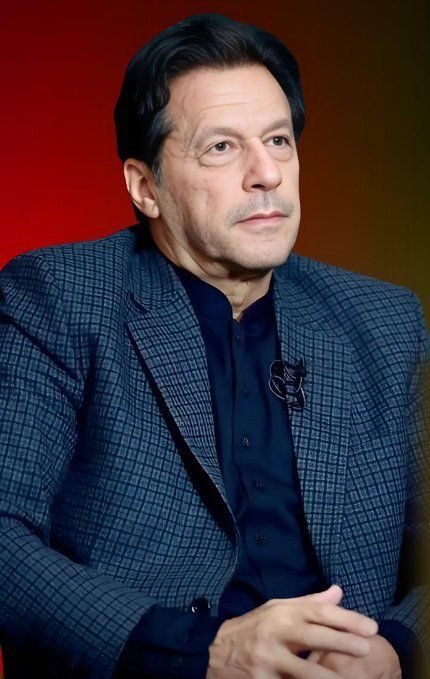
Imran Khan is one of the most influential, controversial, and widely-discussed personalities in Pakistan’s modern history. His life story travels through five powerful worlds: cricket, philanthropy, politics, government leadership, and a dramatic downfall. Supporters view him as a reformer who stood against decades of corruption. Critics see him as a leader who promised too much and delivered too little.
Early Life and Family Background
Imran Ahmad Khan Niazi was born on 5 October 1952 in Lahore. He belonged to a well-respected Pashtun family with deep cultural roots and strong educational values. His father, a civil engineer, emphasized discipline and integrity, while his mother nurtured compassion and confidence.
These early influences shaped his mindset, his leadership style, and his determination to excel.
From childhood, he showed an unusual combination of athletic talent, curiosity, and social awareness. He was quiet, introverted, but confident in his abilities, traits that later defined both his cricketing personality and political identity.
Education and Personality Development
Imran studied at elite institutions, including Aitchison College, where he developed a passion for sports. His exposure to competitive environments helped him build mental toughness. He later moved to England for higher education, where he studied economics and developed into a well-rounded young man who understood both Eastern and Western cultures.
During these years, he improved his:
-
communication
-
leadership skills
-
analytical thinking
-
physical discipline
This mix created the foundation for his future rise in both cricket and politics.
Rise in Cricket
Imran Khan began his international cricket journey in the early 1970s. At first, he wasn’t an instant star. He had to work hard, strengthen his body, and remodel his bowling action.
His dedication paid off, transforming him into one of the most feared fast bowlers in the world.
By the late 1970s, he was known for:
-
explosive pace
-
reverse swing mastery
-
competitive aggression
-
accuracy and stamina
His confidence and presence on the field turned him into a natural leader.
The 1992 World Cup Victory
This moment is the crown jewel of his cricket career.
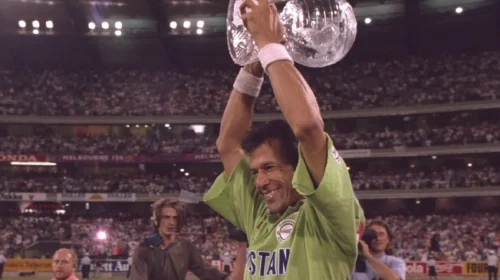
In 1,992, Pakistan entered the tournament as underdogs, struggling in the early matches. Under Imran Khan’s leadership, they bounced back, developed unity, and played fearlessly.
The final match became historic. Pakistan defeated England, winning their first-ever Cricket World Cup.
Imran’s iconic “cornered tigers” speech and his calm captaincy remain legendary.
This victory transformed him from a sportsman into a national hero.
Retirement and Shift to Philanthropy
After the 1992 World Cup, Imran retired at the peak of his career.
Instead of staying in the sports world, he chose philanthropy. His mother’s battle with cancer pushed him to build a modern cancer hospital in Pakistan.
This was a near-impossible dream at the time, but he made it happen.
He became known for:
-
humanitarian work
-
fundraising campaigns
-
health awareness initiatives
His philanthropic success gave him moral authority that later helped him in politics.
The Birth of PTI (1996)
In 1996, he launched Pakistan Tehreek-e-Insaf (PTI).
The party promoted:
-
justice
-
anti-corruption
-
equality
-
welfare
The early years were difficult. PTI barely won votes. Most people believed Pakistan’s politics was too deeply rooted in traditional power structures. But Imran refused to quit, believing change required time.
Early Political Struggles
For nearly a decade, PTI remained irrelevant.
Imran Khan participated in protests, spoke about corruption, and continued advocating for political reform.
He was often criticized for having no political experience and no strong party structure.
But his message slowly began to resonate with younger and urban voters.
Imran Khan in Parliament (2002)
He won his first seat in Parliament in the 2002 elections.
Though his party was still small, this victory proved that public sentiment was shifting.
He used his time in the National Assembly to speak about justice, accountability, and governance problems.
PTI’s Big Break (2013)
The 2013 elections were a turning point.
PTI became one of Pakistan’s largest parties, winning millions of votes.
Although they did not form the government, PTI’s rise showed that Imran Khan had become a mainstream political force.
His support was strongest among:
-
youth
-
educated middle-class families
-
overseas Pakistanis
-
anti-status-quo voters
This wave of energy pushed PTI forward.
The Road to Prime Minister (2018)
By 2018, the political climate had shifted.
Public frustration with corruption and misgovernance created a demand for new leadership.
PTI ran an aggressive campaign centered on change, justice, and accountability.
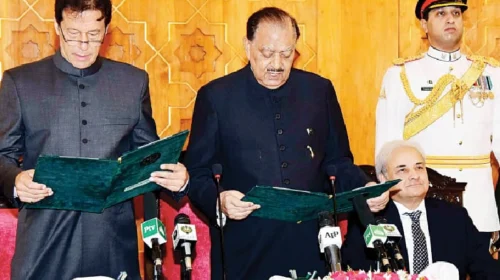
The party won the 2018 election, and Imran Khan became the 22nd Prime Minister of Pakistan.
Imran Khan’s Term in Office (2018–2022)
His tenure was filled with ambitious plans and significant challenges. He introduced major reforms in:
-
governance
-
tax system
-
welfare programs
-
foreign policy
He promoted simplicity, anti-corruption efforts, and social protection networks.
However, the government also faced:
-
inflation
-
debt pressure
-
weak economic structure
-
political instability
These issues created serious difficulties for his administration.
Economic Policies
Imran Khan’s government attempted to stabilize the economy by reducing fiscal deficits
-
improving tax collection
-
encouraging foreign investment
-
promoting digital systems
The economy saw mixed results.
Some policies improved transparency, but inflation created frustration among citizens.
Foreign Policy and Global Image
Imran Khan gained global recognition for his calm diplomacy.
He emphasized peace in the region, strong relations with Muslim countries, and cooperation with major global players.
His speeches often focused on justice, Islamophobia, and global inequality, which earned him respect in international forums.
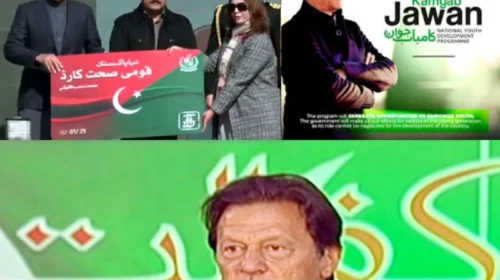
Social Welfare and Reforms
His government launched:
-
a major welfare program
-
interest-free loan schemes
-
shelter homes for the homeless
-
scholarships for students
-
healthcare programs
These initiatives strengthened his image as a social reformer.
Controversies and Criticisms
Despite his popularity, he faced strong criticism for:
-
economic instability
-
governance issues
-
alleged political targeting of opponents
-
cabinet reshuffles
-
strained relations with institutions
Supporters defended him, saying he inherited a broken system.
Opponents claimed he failed to deliver his promises.
No-Confidence Motion (2022)
In April 202,2, the opposition united against him.
He was removed from office through a no-confidence vote — the first Prime Minister in Pakistan to face this outcome.
This event triggered massive polarization across the country.
The Long March & Assassination Attempt
After being removed from office, he held large rallies and demanded early elections.
During one of these protests, she survived an assassination attempt.
This incident increased his popularity and deepened political tension nationwide.
Arrests, Trials, and Prison Life (2023–2025)
In 2023 and 2,024, he faced multiple legal cases.
He was arrested, released, and arrested again. Eventually received long sentences in major cases and was imprisoned.
His party faced restrictions and internal fractures.
Yet his political influence remained strong.
Even from prison, he continued to shape national discussions.
Imran Khan in 2025
As of 202,5, Imran Khan remains imprisoned but is still one of the most influential figures in Pakistan.
His supporters consider him a symbol of resistance, while critics believe his political chapter is over.
Regardless of opinions, his presence remains impossible to ignore.
Legacy and Impact
Imran Khan’s life leaves behind a mixed but powerful legacy.
He is remembered as:
A cricket legend
The only captain who brought Pakistan the World Cup.
A philanthropist
Creator of one of the country’s leading cancer hospitals.
A political fighter
A man who built a political party from nothing.
A controversial Prime Minister
Praised by many, criticized by others.
A polarizing national figure
Loved fiercely by supporters, strongly opposed by critics.
Few leaders in Pakistan have combined sports, charity, politics, and controversy the way Imran Khan has.
Frequently Asked Questions
1. Who is Imran Khan?
Imran Khan is a former cricketer, philanthropist, and Prime Minister of Pakistan.
2. Why is Imran Khan famous?
He is most famous for winning the 1992 Cricket World Cup and later becoming Prime Minister.
3. What political party does Imran Khan belong to?
He is the founder and leader of Pakistan Tehreek-e-Insaf (PTI).
4. Why was Imran Khan removed as Prime Minister?
He was removed in April 2022 through a no-confidence vote in Parliament.
5. Where is Imran Khan now in 2025?
He is currently in prison due to multiple legal convictions, but remains politically influential.
About the Author