Lower back pain is one of the most common issues people face today, whether from sitting all day, lifting poorly, or simply neglecting mobility. The good news? You can often relieve that dull ache or tight stiffness with the right lower back stretches.
In this guide, you’ll learn the best stretches for your lower back, how to do them safely, and how to make them part of your daily routine. By the end, you’ll have a simple plan that helps your back feel lighter, looser, and stronger.
Why Stretching Your Lower Back Matters
Stretching isn’t just about flexibility — it’s about maintaining balance and function in the muscles that support your spine.
Your lower back works closely with your hips, glutes, and core muscles. When these areas tighten up, your spine compensates, leading to pain or restricted movement.
Here’s why lower back stretching is so important:
- Releases muscle tension built from sitting or poor posture
- Improves circulation, reducing stiffness and inflammation
- Enhances spinal mobility for easier movement and bending
- Promotes better posture by realigning your pelvis and spine
- Reduces pain by easing pressure on the lumbar discs
The main muscles involved in lower back tightness include the erector spinae, quadratus lumborum (QL), glutes, hamstrings, and hip flexors. When any of these shorten, they pull on your lower back — stretching helps restore balance.
How to Stretch Safely
Before jumping into the exercises, it’s crucial to understand a few safety principles. Stretching the wrong way can sometimes worsen back discomfort rather than ease it.
Key Safety Tips
- Warm up first — a short walk or gentle movement increases blood flow.
- Go slow — move gradually into each stretch; never force it.
- Breathe deeply — exhale as you move deeper; inhale as you return.
- Stay consistent — daily gentle stretching brings the best results.
- Avoid pain — mild tension is fine, but sharp pain means stop.
- Hold, don’t bounce — static holds are safer and more effective.
If you have severe or chronic back pain, check with a healthcare provider before starting any new exercise routine.
Top 8 Lower Back Stretches for Pain Relief and Mobility
These tried-and-tested stretches are beginner-friendly and safe for most people. Each targets key muscles that influence your lower back.
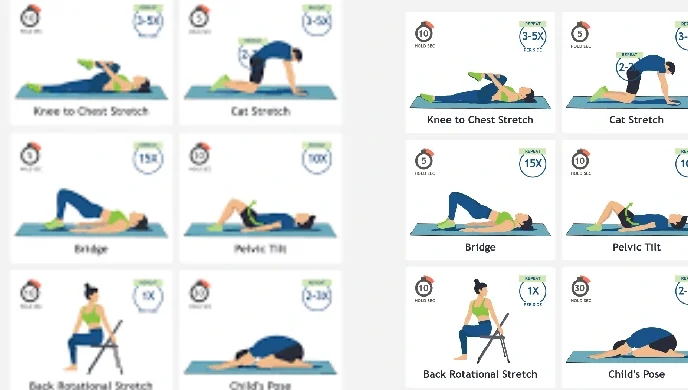
1. Knee-to-Chest Stretch
How to do it:
Lie on your back with both knees bent and feet flat. Gently pull one knee toward your chest while keeping the other leg relaxed on the floor. Hold for 30–60 seconds, then switch legs.
Targets: lower back, glutes, and hips.
Tip: Keep your shoulders and head relaxed on the mat.
2. Supine Spinal Twist
How to do it:
Lie flat with knees bent. Drop both knees slowly to one side while keeping your shoulders grounded. Extend your arms outward in a T-shape. Hold for 30 seconds on each side.
Targets: lower back, spine, and obliques.
Tip: Move slowly and avoid jerking the knees; focus on gentle rotation.
3. Cat-Cow Stretch
How to do it:
Start on your hands and knees. Inhale, arch your back, and lift your head and tailbone (Cow). Exhale, round your spine, and tuck your chin toward your chest (Cat). Repeat 10–15 times.
Targets: entire spine, core, and lower back.
Tip: Synchronize movement with breathing to release tension effectively.
4. Child’s Pose
How to do it:
Kneel on the floor, touch your big toes together, and sit back on your heels. Stretch your arms forward and rest your forehead on the floor. Stay for 30–60 seconds, breathing slowly.
Targets: lower back, hips, glutes, and shoulders.
Tip: If your hips don’t reach your heels, place a cushion between your thighs and calves for support.
5. Pelvic Tilt
How to do it:
Lie on your back with knees bent and feet hip-width apart. Flatten your lower back into the floor by tightening your abs and tilting your pelvis slightly upward. Hold for 5–10 seconds, then relax. Repeat 10–15 times.
Targets: lower back, abs, and hips.
Tip: This is a great activation exercise for your core before other stretches.
6. Hamstring Stretch
How to do it (Seated):
Sit tall on the floor with one leg extended and the other bent. Lean forward from your hips toward the straight leg, keeping your back straight. Hold for 20–30 seconds and switch sides.
Targets: hamstrings, lower back, and calves.
Tip: Don’t force the stretch; keep the movement gentle.
7. Piriformis Stretch (Figure-4 Stretch)
How to do it:
Lie on your back with both knees bent. Cross your right ankle over your left thigh, making a “4” shape. Gently pull your left thigh toward your chest and hold for 30–60 seconds. Switch sides.
Targets: piriformis, glutes, and lower back.
Tip: Keep your head on the ground and shoulders relaxed.
8. Cobra or Sphinx Stretch
How to do it (Sphinx):
Lie face down and place your forearms flat under your shoulders. Lift your chest off the floor while keeping your hips grounded. Hold for 20–30 seconds.
For Cobra: Straighten your arms slightly more to deepen the stretch, but avoid pain.
Targets: lower back, chest, and abs.
Tip: Perfect for counteracting forward-bending posture from sitting.
Advanced or Alternative Stretches
Once you’re comfortable with the basics, you can progress to these slightly deeper movements:
- QL Side Stretch: Stand tall, raise one arm, and lean gently to the opposite side to stretch the side of your lower back.
- Lunge with Rotation: Step one foot forward into a lunge, place the opposite hand on the ground, and twist your torso toward the front leg.
- Supported Bridge Pose: Lie on your back with knees bent and a small cushion or yoga block under your pelvis. Let your back relax over the support for 1–2 minutes to decompress the spine. How to Add These Stretches to Your Routine
Stretching works best when it’s consistent. You don’t need an hour-long session — just 10 to 15 minutes a day can make a big difference.
Morning Routine
Start your day with gentle movements like Cat-Cow, Knee-to-Chest, and Pelvic Tilts. They wake up your spine and prepare your body for the day.
Work Breaks
If you sit at a desk, try doing a few standing side stretches or a seated spinal twist every couple of hours. It prevents stiffness and boosts circulation.
Evening Wind-Down
End your day with relaxing poses such as Child’s Pose and Sphinx. These help you unwind and sleep more comfortably.
Combine Stretching with Strength
Stretching relieves tightness, but building strength keeps your spine supported. Add exercises like glute bridges, planks, or bird-dogs a few times a week.
Posture Tips
Maintain neutral spine alignment while sitting or standing. Keep your shoulders back, feet flat, and avoid slouching. Small posture adjustments go a long way in preventing pain.
Common Stretching Mistakes to Avoid
Even good exercises can backfire if done incorrectly. Watch out for these common errors:
- Overstretching: Pushing too far can strain muscles and ligaments.
- Bouncing Movements: Rapid jerks increase the risk of injury.
- Holding Breath: Always breathe; oxygen relaxes muscles and deepens stretches.
- Ignoring Pain Signals: Pain means stop — don’t push through.
- Skipping Strength Work: Weak core and glutes often cause recurring lower back issues.
A mindful, gentle approach always wins over aggressive stretching.
When to See a Professional
If your back pain lasts more than a few weeks or keeps returning, it’s time to get help. Seek medical or physiotherapy advice if you experience:
- Pain that radiates down your legs
- Numbness, tingling, or weakness
- Suddenly, sharp or severe pain after an injury
- Difficulty standing, walking, or sleeping due to discomfort
A trained professional can assess your condition, correct imbalances, and design a personalized plan.
Frequently Asked Questions
Q1: Can I do lower back stretches every day?
Yes. Daily stretching helps maintain flexibility and relieve stiffness. Keep it gentle and consistent rather than intense.
Q2: How long should I hold each stretch?
Hold each one for 20–60 seconds. Breathe slowly and focus on relaxing the muscle rather than forcing the movement.
Q3: Will stretching alone fix my back pain?
Not always. Stretching reduces tightness, but strengthening and posture correction are equally important for lasting results.
Q4: How soon will I feel improvement?
You may notice relief after the first session, but consistent stretching over two to three weeks brings lasting change.
Q5: Can stretching make my back worse?
It can if done incorrectly. Avoid painful ranges of motion and jerky movements. If symptoms worsen, stop and consult a healthcare expert.
Conclusion
Your lower back is the foundation of nearly every movement you make — sitting, standing, bending, or walking. Keeping it flexible and strong is essential for a pain-free life.
By practicing these lower back stretches regularly, you can release tension, improve posture, and prevent discomfort before it starts. All it takes is a few mindful minutes a day. Listen to your body, move gently, and enjoy the freedom of a healthier, more flexible back.
About the Author