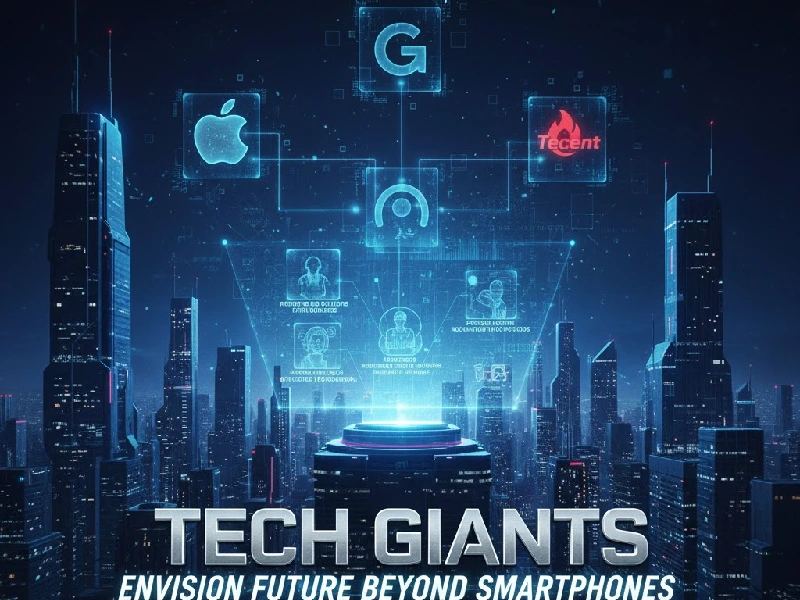
Tech Giants Envision Future Beyond Smartphones are everywhere. We use them every day. They are our cameras, calendars, and alarms. They help us talk to friends and work online. But tech giants are thinking about a world without smartphones.
They want devices that are smarter and easier to use. They are building new ways to see, hear, and interact with technology. These new devices include smart glasses, watches, AI assistants, and more.
This article explains what tech giants are planning. We will look at the technology, the companies, and how our lives might change. We will also answer common questions about this new world.
Why Tech Giants Want a World Beyond Smartphones
Smartphones Are Reaching Limits
Smartphones are very popular. But most people already have one. Phones are not growing as fast as before. New phones look similar to old ones.
Tech companies want to make devices that are new and exciting. They want devices that do more than a phone. They want gadgets that fit naturally in our lives.
AI and Smart Technology
AI stands for artificial intelligence. It is like a smart brain for devices. AI can help plan your day, suggest what to do, and answer questions.
Tech giants are adding AI to many devices. Phones, watches, and glasses can all use AI. This means technology can work without a phone.
New Technologies Beyond Smartphones
Augmented Reality (AR) and Mixed Reality (MR)
AR and MR put digital things into the real world. You can see digital objects through smart glasses.
-
Example: Walking in a city and seeing directions on your glasses.
-
Example: Collaborating with coworkers on a 3D model while sitting at home.
Devices: Apple Vision Pro, Meta glasses, Google Android XR.
AI Assistants
AI assistants help you without typing or tapping.
-
They remind you of tasks.
-
They answer questions.
-
They suggest what to do next.
Examples: Google Gemini, Siri, Alexa.
AI assistants will work across all your devices. You will not need a phone to use them.
Wearables as Small Computers
Wearables are small devices you wear. They can do many tasks.
-
Smartwatches can call people and check messages.
-
Smart rings can track health and control apps.
-
Earbuds can translate languages and give directions.
Wearables can become your main device instead of a phone.
Brain-Computer Interfaces
This is new technology. It can read brain signals. One day, you may control devices with your thoughts.
-
Example: Think of moving a cursor on a screen.
-
Example: Control smart home devices without touching anything.
These are early experiments, but they show what’s possible.
How Major Tech Companies Are Leading the Change
Apple
Apple makes smart glasses and watches. They focus on spatial computing.
-
Apple Vision Pro shows digital objects in the real world.
-
Watches track health and send messages.
-
Apple wants all devices to work together.
Google focuses on AI and smart environments.
-
Android XR is for AR and MR devices.
-
Gemini AI predicts what you need.
-
Google wants devices to work without phones.
Meta
Meta makes AR glasses and VR headsets.
-
Ray-Ban Meta glasses look like normal glasses.
-
Hypernova is an AR device for daily use.
-
Meta wants devices to be fun and easy to use.
Microsoft
Microsoft focuses on work and business.
-
HoloLens helps in offices and schools.
-
Mixed reality shows digital objects in real space.
-
Microsoft wants better collaboration and productivity.
Daily Life Without Smartphones
AI Always Helps You
Imagine AI assistants everywhere. They can:
-
Tell you the weather before you ask.
-
Remind you to take medicine.
-
Suggest what to eat or wear.
Screens Might Disappear
You might not need to look at a phone.
-
Smart glasses can show information.
-
Virtual screens can float in your space.
-
You can see messages, maps, or videos anywhere.
Devices Work Together
Your watch, glasses, and earbuds can talk to each other.
-
Start a task on your glasses, finish it on your computer.
-
Get directions on your watch while walking.
-
Answer calls with your earbuds.
Everyday Examples of Post-Smartphone Life
-
Shopping: Try clothes virtually using smart mirrors.
-
Travel: AR glasses show directions and landmarks.
-
Work: Collaborate on 3D models without physical screens.
-
Health: Track heart rate and blood sugar with wearables.
-
Learning: Interactive lessons appear in your room.
Fun Facts About Future Devices
-
Some smart glasses will weigh less than 100 grams.
-
Watches may become your main phone.
-
AI assistants can learn your habits in days.
-
Some devices can work even without the internet.
-
Brain-computer devices may allow control with thoughts alone.
Challenges to Moving Beyond Smartphones
-
Battery Life: Small devices need strong batteries.
-
Cost: New devices can be expensive.
-
Privacy: Devices will have personal data.
-
Adoption: People are used to phones.
-
Technology: Some devices are still experimental.
When Will Smartphones Become Less Important?
Smartphones will not disappear quickly.
-
Analysts think smartphones will slowly lose importance by 2035.
-
Phones will work with new devices for many years.
-
Gradual change makes it easier for people to adapt.
FAQs About Life Beyond Smartphones
What is the “future beyond smartphones”?
It is a world where smartphones are not the main device. Smart glasses, watches, and AI assistants do most tasks.
Which companies are leading this change?
Apple, Google, Meta, and Microsoft are the leaders. They make AR devices, AI assistants, and wearables.
Will smart glasses replace smartphones?
Not right away. They will complement phones at first and may replace some functions later.
Do AI assistants make phones useless?
No. They help across devices, but phones are still useful.
Is it safe to trust wearables with personal data?
Privacy is important. Users need security to protect their data.
About the Author